Transforming Your Oconee Front Yard: A Guide to Native Landscape Conversions
Learn how to replace your high-maintenance turf lawn with a beautiful, sustainable native plant community that increases property value and biodiversity.
The Problem with Traditional Lawns in Georgia
The traditional American front lawn — a manicured carpet of turf grass — has become a staple of suburban life in Northeast Georgia. However, this aesthetic comes at a significant ecological and financial cost. Turf grass is essentially an 'ecological desert,' requiring massive inputs of water, synthetic fertilizers, and pesticides to maintain its appearance while providing virtually no habitat value for local wildlife.
In counties like Oconee and Athens-Clarke, where summer heat and occasional droughts can stress non-native grasses, maintaining a pristine lawn is a never-ending cycle of high-cost intervention. Moreover, the runoff from these chemically treated lawns often ends up in our local waterways, contributing to pollution and algae blooms in the Oconee River watershed.
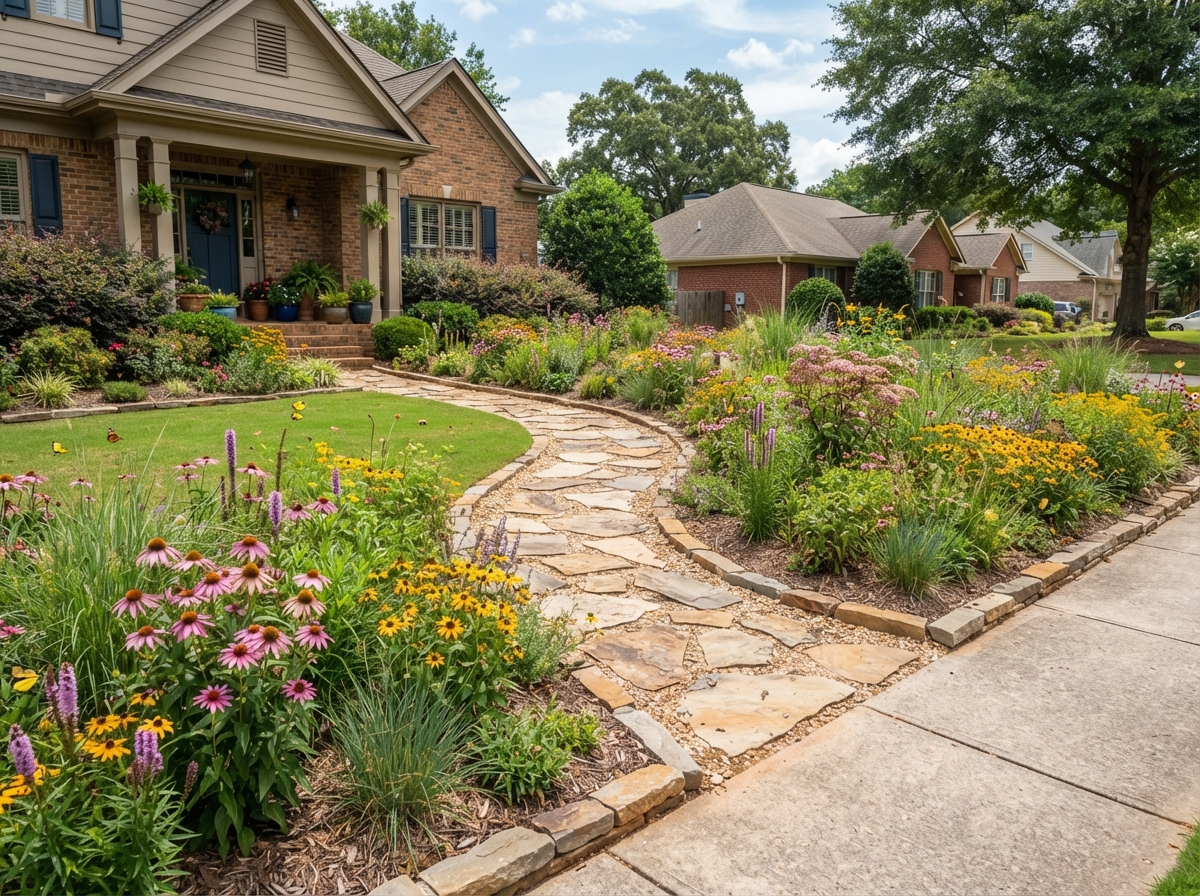
Native landscape conversion offers a modern, intelligent alternative. By replacing large swaths of turf with regionally adapted native plant communities, homeowners can create a dynamic, beautiful landscape that thrives naturally in our Georgia climate. These landscapes require 70% less maintenance over time and provide critical resources for pollinators, birds, and other beneficial wildlife.
The typical Georgia homeowner spends between $1,200 and $2,500 annually on lawn care — including mowing services, fertilizers, herbicides, irrigation water, and equipment maintenance. Over a ten-year period, that investment can exceed $25,000, all to maintain a landscape that actively harms the local ecosystem. A native landscape conversion flips this equation, transforming your yard from a cost center into an ecological asset that appreciates in value over time.
The Native Landscape Conversion Process: Step by Step
A successful native landscape conversion is not simply a matter of ripping out grass and scattering wildflower seeds. It requires careful planning, site assessment, and phased implementation to ensure the new landscape establishes successfully. At Senior Partner Landscaping, we follow a proven five-phase process that has been refined across dozens of projects throughout Oconee, Athens-Clarke, and surrounding counties.
Phase one is site assessment and design. We begin by analyzing your property's soil composition, drainage patterns, sun exposure, and existing vegetation. Every site in Northeast Georgia presents unique conditions — clay-heavy soils in Watkinsville drain differently than the loamy soils found in parts of Bogart. We use this data to create a custom planting plan that groups species by their preferred micro-conditions, ensuring each plant is placed where it will thrive without artificial inputs.
Phase two is turf removal. We primarily use sheet mulching (also known as lasagna mulching), a chemical-free method that layers cardboard, compost, and mulch over existing turf to smother it while building soil health. This approach takes 6-8 weeks but preserves soil structure and biology, unlike sod cutters which strip away the topsoil. For larger properties, we may use solarization — clear plastic sheeting that uses the Georgia sun to kill turf and weed seeds over 6-8 weeks during summer.
Phase three is soil preparation and amendment. Georgia's native soils are often compacted and depleted from years of chemical lawn treatments. We incorporate compost, leaf mold, and organic matter to restore soil biology. In some cases, we introduce mycorrhizal fungi inoculants to reestablish the underground fungal networks that native plants depend on for nutrient and water uptake.
Phase four is installation. We plant in drifts and masses rather than single specimens, mimicking how plants naturally occur in Georgia's remnant prairies and savannas. This approach creates visual impact while also providing the dense habitat structure that pollinators and beneficial insects need. We typically install 70-80% of the landscape in the first season, then fill in gaps and add diversity in subsequent seasons.
Phase five is establishment and stewardship. The first two years require the most attention as plants develop their root systems. We provide detailed care guidance and optional maintenance services to ensure your investment matures successfully. By year three, most native landscapes are largely self-sustaining, requiring only seasonal monitoring and occasional intervention.
Choosing the Right Native Plants for Oconee County
Plant selection is the single most important factor in a successful conversion. We focus on species that are native to the Piedmont region of Georgia, which encompasses Oconee, Athens-Clarke, Barrow, Jackson, and Walton counties. These plants have evolved over thousands of years to handle our specific climate patterns, soil types, and pest pressures.
For sunny front yards, we recommend a backbone of warm-season native grasses like Little Bluestem (Schizachyrium scoparium) and Pink Muhly Grass (Muhlenbergia capillaris). These grasses provide year-round structure, stunning fall color, and deep root systems that prevent erosion. Interplanted with these grasses are flowering perennials like Purple Coneflower (Echinacea purpurea), Black-eyed Susan (Rudbeckia hirta), and Georgia native Lanceleaf Coreopsis (Coreopsis lanceolata), which provide months of bloom and support dozens of pollinator species.
For partially shaded yards, which are common in established neighborhoods with mature trees, we use a different palette. Native ferns like Christmas Fern (Polystichum acrostichoides) and Cinnamon Fern (Osmunda cinnamomea) provide texture and erosion control. Understory shrubs like Virginia Sweetspire (Itea virginica) and Oakleaf Hydrangea (Hydrangea quercifolia) offer multi-season interest and habitat value.
We always include a minimum of three species that bloom in each season — spring, summer, and fall — to ensure continuous resources for pollinators. Spring bloomers like Eastern Redbud (Cercis canadensis) and native azaleas provide critical early nectar. Summer is covered by Coneflowers, Bee Balm (Monarda didyma), and Blanket Flower (Gaillardia pulchella). Fall relies on native Asters and Goldenrods (Solidago species), which are powerhouses for late-season pollinators including migrating monarchs.
It is also important to avoid what we call 'native plant imposters.' Many nurseries sell cultivars of native plants that have been bred for unusual flower colors or compact habits, often at the expense of nectar and pollen production. We source true species or ecologically vetted cultivars to ensure your garden actually functions as habitat, not just decoration.
The Financial Case: ROI of Native Conversions
One of the most common questions we hear from homeowners in Oconee County is whether a native landscape conversion makes financial sense. The answer is a resounding yes — and the numbers are compelling. A study by the University of Georgia's College of Agricultural and Environmental Sciences found that established native landscapes can reduce landscape maintenance costs by up to 80% compared to traditional turf.
Consider the annual costs of a traditional lawn: weekly mowing ($40-60 per cut, 30+ cuts per year = $1,200-$1,800), fertilization programs ($300-500), irrigation water ($200-600 depending on summer heat), and pest and weed control ($200-400). Total annual cost: $1,900-$3,300. A mature native landscape, by contrast, requires one annual cut-back in late winter ($200-400), occasional weeding ($200-300), and no irrigation, fertilization, or pesticides. Total annual cost: $400-700.
The initial investment in a conversion typically ranges from $8,000 to $20,000 depending on property size and scope, but the payback period is usually 4-6 years when compared to ongoing lawn care costs. After that, the savings compound year after year. Over a 15-year period, a homeowner can save $15,000-$30,000 in maintenance costs alone.
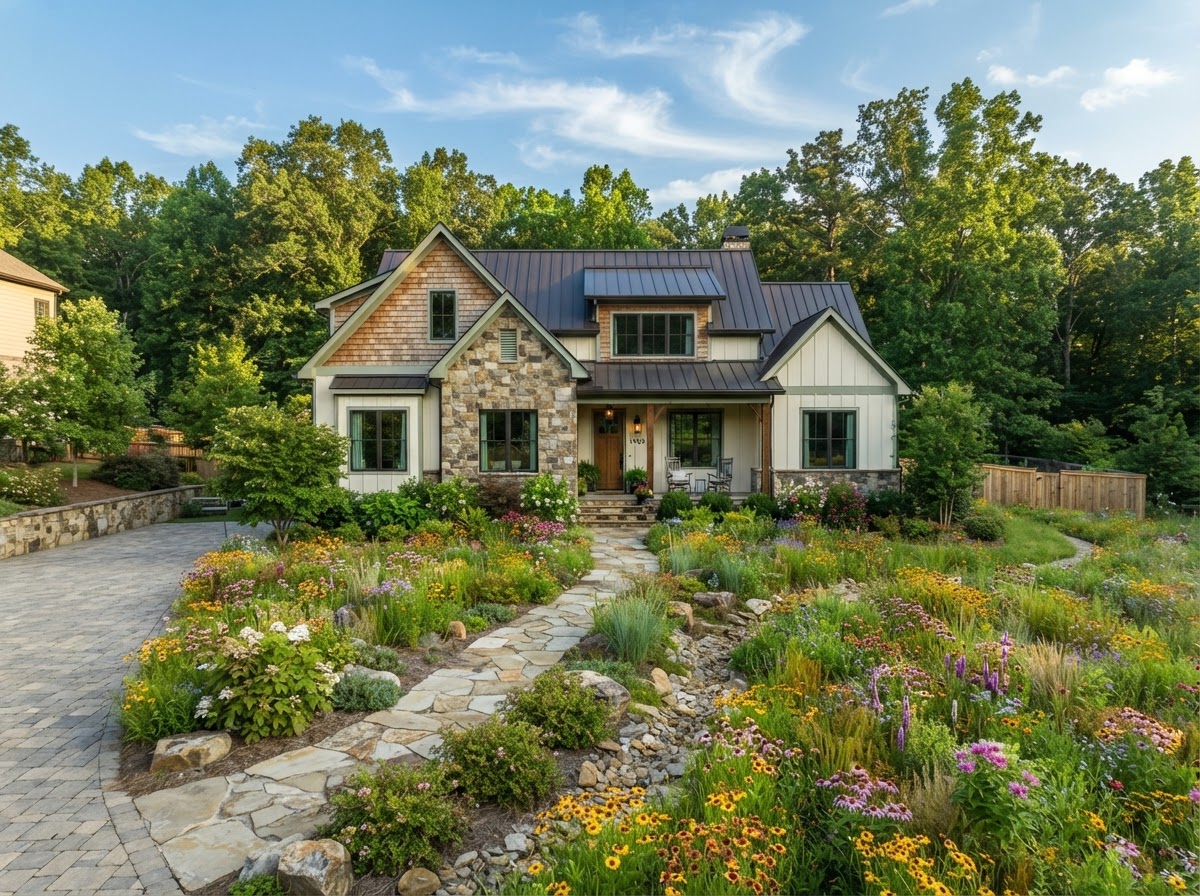
Property value is the other side of the equation. A well-designed native landscape can increase home value by 5-15%, according to real estate data from the Athens area. Appraisers increasingly recognize the value of established, low-maintenance landscapes, particularly as water costs rise and environmental awareness grows among homebuyers. In Oconee County's competitive real estate market, properties with mature native landscaping consistently stand out and often sell faster than comparable homes with traditional lawns.
Navigating HOA Regulations and Community Standards
Many homeowners in Northeast Georgia live in communities governed by homeowners associations (HOAs) that have strict guidelines about front yard appearances. The good news is that attitudes are shifting, and most HOAs are more receptive to native landscaping than they were even five years ago. The key is approach and communication.
We help clients navigate HOA approval by providing professional landscape plans that clearly demonstrate the conversion will be intentional, maintained, and attractive — not a neglected yard. Our designs incorporate clean edges, defined borders, and a structured aesthetic that reads as 'landscaped' rather than 'wild.' We also provide educational materials that explain the ecological and community benefits of native landscapes.
Georgia law also provides some protections. In 2023, the Georgia General Assembly considered legislation that would prevent HOAs from banning native plant landscapes, following similar laws passed in Florida, Texas, and Maryland. Even without specific state legislation, many HOA boards are updating their guidelines to allow and even encourage sustainable landscaping practices.
If you are planning a conversion in an HOA community, we recommend starting with a conversation with your architectural review committee. We can attend these meetings with you, present the design plan, and address any concerns about maintenance, appearance, or property values. In our experience, most committees approve well-designed native landscape plans, particularly when they see examples of successful conversions in similar neighborhoods.
Maintaining Your New Native Landscape
While native landscapes require far less maintenance than turf lawns, they are not maintenance-free. The first two years are critical for establishment, and the type of care your landscape needs will change as it matures. Understanding these seasonal rhythms is key to long-term success.
In the first growing season, your new plants are focused on root development rather than top growth. Watering is important during dry spells, particularly in July and August when Georgia's heat can stress newly installed plants. We recommend deep, infrequent watering to encourage deep root growth. Weeding is also critical in year one, as opportunistic weeds will try to fill the gaps between your native plants.
By year two, the landscape begins to fill in as plants establish and spread. You will see more blooms and increased wildlife activity. Maintenance shifts to monitoring and selective intervention — removing any aggressive species that are crowding out others, and adding plants to fill any persistent gaps.
From year three onward, the landscape is largely self-sustaining. Annual maintenance consists of a late-winter cut-back (February or early March), occasional weeding, and seasonal monitoring. Many of our clients choose our ecological maintenance service, which provides professional stewardship on a seasonal schedule, ensuring the landscape continues to mature and improve year after year.
Frequently Asked Questions
Q.How long does a native landscape conversion take?
A typical residential conversion takes 6-8 weeks from site preparation to planting. Using methods like sheet mulching requires a few weeks for the turf to decompose before installation.
Q.Will a native landscape look messy or neglected?
No. A professionally designed native landscape uses structured planting patterns, clean edges, and carefully selected species to create a polished, intentional look. The key is design — we create landscapes that read as 'landscaped' rather than 'wild,' while still providing full ecological function.
Q.Can I convert my lawn in phases?
Yes. We often recommend phased conversions for larger properties or budget flexibility. Starting with a high-visibility area like the front entrance or a problem area like a slope with erosion issues allows you to see results while spreading the investment over time.
Senior Partner Landscaping
Ecological Landscaping Experts
Ready to restore your piece of Georgia?
Our ecological designers specialize in native plant systems across Oconee, Athens-Clarke, and surrounding counties.
Book Your Free ConsultationMore from the Blog
Ecological Landscaping and Property Value: The Real Numbers
Do native landscapes actually increase home value? We look at the market data for Georgia real estate.
Full Article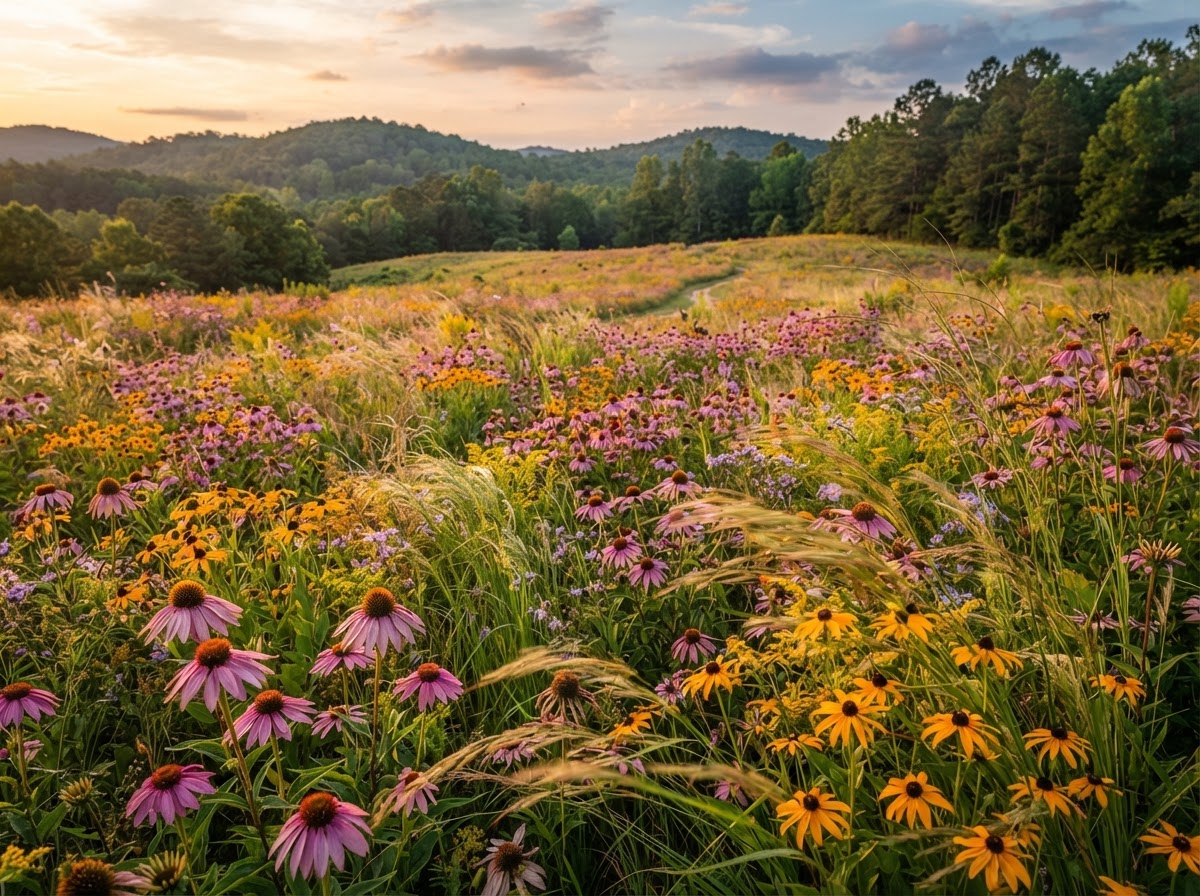
Native Meadow vs. Traditional Lawn: A Cost Comparison
We break down the 10-year cost of a turf lawn versus a native meadow in Northeast Georgia.
Full Article