Eco-Friendly Stormwater Management: Rain Gardens for Georgia Properties
Protect your property from erosion and local rivers from pollution with nature-based stormwater solutions like rain gardens and bioswales.
Turning Stormwater from a Problem into a Resource
Every time a heavy thunderstorm hits Northeast Georgia, thousands of gallons of water rush off roofs, driveways, and lawns. On many properties in Bogart, Watkinsville, and Athens, this uncontrolled runoff leads to foundation issues, eroded hillsides, and standing water in low areas.
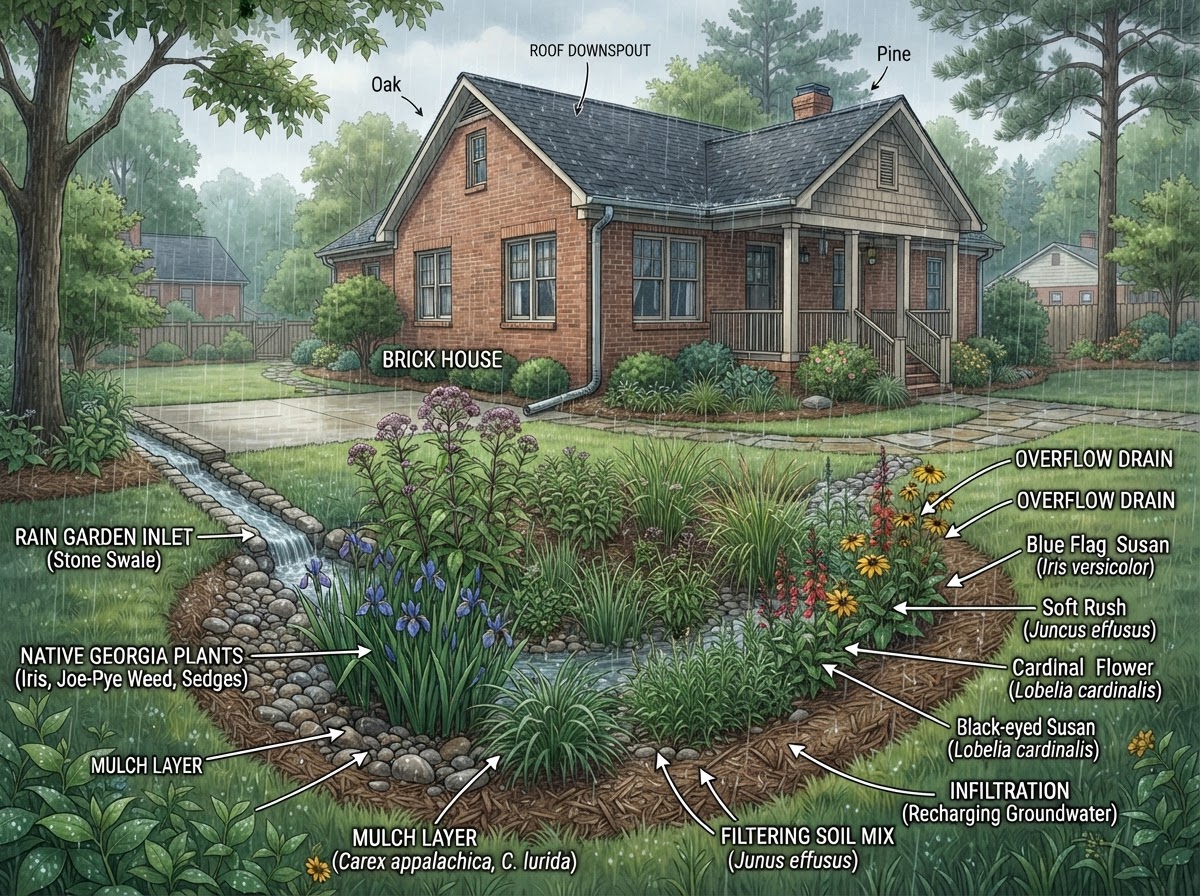
Traditional drainage solutions often involve pipes and concrete, which simply move the problem somewhere else — usually into a neighbor's yard or a local stream. Ecological stormwater management, however, uses nature-based solutions to manage water where it falls. Rain gardens and bioswales are designed to capture, filter, and infiltrate runoff, replenishing groundwater and preventing erosion.
A rain garden is essentially a shallow, planted depression that acts like a sponge. During a storm, it fills with water and allows it to soak into the soil over 24-48 hours. By using deep-rooted native plants, these gardens can absorb 30% more water than a patch of turf grass, all while adding a stunning focal point to your landscape.
The environmental stakes extend well beyond individual properties. Every gallon of runoff that enters a rain garden instead of a storm drain is a gallon that does not carry fertilizers, pesticides, motor oil, and sediment into the Oconee River, the North Oconee River, and ultimately the Altamaha River system. The Georgia Environmental Protection Division has identified stormwater runoff as a leading cause of water quality impairment in our region's streams, and individual property owners play a critical role in the solution.
Designing a Rain Garden: Site Assessment and Sizing
A successful rain garden begins with careful site assessment. The first question is where water naturally flows on your property during and after rainstorms. We look for low points, natural drainage swales, and areas where downspouts discharge. The ideal rain garden location is between the water source (roof, driveway, or lawn) and the storm drain or street — intercepting runoff before it leaves your property.
Sizing is critical. A rain garden that is too small will overflow during heavy storms, while one that is too large may not receive enough water to support its plants. The general rule is that a rain garden should be approximately 20% of the drainage area it serves. For example, if your roof is 2,000 square feet and all downspouts route to the garden, the rain garden should be about 400 square feet. We adjust this ratio based on soil infiltration rates, which we test on-site using simple percolation tests.
Soil type is the most important variable in Georgia rain garden design. Much of Oconee and Athens-Clarke counties has heavy clay soils that drain slowly. In these conditions, we amend the soil with compost and sand to improve infiltration, or we design the garden with a modified profile that includes an underdrain — a perforated pipe beneath the garden that carries excess water away after it has been filtered through the soil and plant roots.
The depth of a rain garden is typically 4-8 inches at its deepest point, with gently sloping sides. This shallow depth is intentional — it allows the garden to fill during storms but drain quickly enough to prevent standing water issues. The ponding zone, where water temporarily collects, is surrounded by a transition zone and an upland zone, each planted with species adapted to different moisture levels.
We also consider overflow carefully. Even a properly sized rain garden can be overwhelmed by an extreme storm. We design overflow pathways that route excess water safely to a secondary infiltration area or an existing drainage system, preventing erosion and protecting nearby structures.
The Best Native Plants for Rain Gardens in Georgia
Plant selection in a rain garden is divided into three zones based on moisture tolerance. The lowest zone, which experiences periodic flooding, requires plants that can tolerate saturated soils for 24-48 hours. The middle zone handles moist but not flooded conditions. The upper zone, which drains quickly, needs plants adapted to typical garden conditions.
For the lowest zone, our go-to species include Blue Flag Iris (Iris versicolor), Swamp Milkweed (Asclepias incarnata), and Joe-Pye Weed (Eutrochium purpureum). These plants thrive in saturated soil and their root systems help maintain soil structure and infiltration capacity. Blue Flag Iris provides stunning early summer blooms, while Swamp Milkweed serves double duty as a critical monarch butterfly host plant.
The middle zone supports a wider range of species. Cardinal Flower (Lobelia cardinalis) is a standout, attracting hummingbirds with its brilliant red spikes. Other excellent choices include Turtlehead (Chelone glabra), Great Blue Lobelia (Lobelia siphilitica), and New York Ironweed (Vernonia noveboracensis). These plants provide late-season blooms that are critical for pollinators preparing for winter.
The upper zone blends seamlessly with the surrounding landscape. Here we use the same drought-tolerant natives that work throughout Georgia gardens: Purple Coneflower, Black-eyed Susan, Little Bluestem, and Pink Muhly Grass. This zone is where the rain garden transitions visually into the rest of your landscape, creating a cohesive design rather than a feature that looks like a drainage ditch.
We always include a high percentage of grass-like plants and sedges in rain garden designs. Species like Soft Rush (Juncus effusus) and Pennsylvania Sedge (Carex pensylvanica) have dense, fibrous root systems that maintain soil porosity and prevent the garden from clogging over time. These roots also create channels that help water infiltrate more deeply into the soil profile.
Bioswales: Scaling Up for Larger Properties
While rain gardens are ideal for residential properties, larger sites — estates, commercial properties, HOA common areas, and schools — often require bioswales. A bioswale is essentially an elongated rain garden designed to convey, slow, and infiltrate runoff from larger drainage areas. They are particularly effective along driveways, parking areas, and property boundaries.
Bioswales are engineered linear features, typically 5-15 feet wide, that are designed to handle a specific volume of stormwater based on the contributing drainage area. Unlike traditional drainage ditches, which are designed to move water as quickly as possible, bioswales are designed to slow water down, allowing it to infiltrate into the soil and be taken up by plants.
In Northeast Georgia, bioswales are particularly valuable on sloped properties where runoff velocity can cause significant erosion. By installing a series of check dams — low stone or earth barriers across the swale — we create a stepped system that slows water and allows sediment to settle out. Each pool behind a check dam becomes a mini wetland that supports its own plant community.
For commercial properties in Athens and Oconee County, bioswales can also help meet stormwater management requirements. Many local jurisdictions require new developments to manage a certain volume of stormwater on-site, and vegetated bioswales are an approved best management practice (BMP) under Georgia's stormwater regulations. They provide compliance while also enhancing the property's appearance and supporting local wildlife.
Rain Garden Maintenance and Long-Term Care
One of the most appealing aspects of rain gardens is their low maintenance requirement once established. However, the first two years require some attention to ensure the garden matures properly. In the first growing season, we monitor water levels after storms to confirm the garden is draining within 48 hours. If drainage is slow, we may amend the soil or adjust the overflow path.
Weeding is the primary maintenance task in years one and two. We use a thick layer of hardwood mulch (3-4 inches) to suppress weeds and retain moisture. Any weeds that do emerge are typically shallow-rooted and easy to pull. We avoid landscape fabric in rain gardens because it can impede water infiltration and create a barrier that prevents plant roots from reaching the soil.
From year three onward, maintenance is minimal. An annual cut-back in late winter removes dead stems and makes room for new growth. We leave the cut stems in place rather than bagging them — they provide habitat for overwintering insects and slowly decompose to feed the soil. A fresh layer of mulch every 2-3 years keeps the garden looking fresh and continues to suppress weeds.
The most important long-term maintenance task is monitoring for sediment accumulation. Over time, sand, silt, and organic matter carried by runoff can build up in the rain garden, reducing its storage capacity. If we notice significant accumulation, we carefully remove the excess sediment and replant any disturbed areas. With proper care, a well-designed rain garden will function effectively for 20+ years.
The Environmental Impact: Protecting Georgia's Watersheds
Every rain garden and bioswale installed in Northeast Georgia contributes to the health of our regional watershed. The Oconee River and its tributaries — including the North Oconee, Middle Oconee, and Barber Creek — are vital resources for drinking water, recreation, and wildlife habitat. Stormwater runoff is the primary source of pollution in these waterways, carrying fertilizers, pesticides, bacteria, and sediment from developed land.
A single residential rain garden can capture and filter thousands of gallons of stormwater per year. When rain gardens are installed across a neighborhood, their cumulative impact is significant. Studies from the University of Georgia show that neighborhoods with widespread rain garden adoption can reduce stormwater runoff by 40-60% compared to neighborhoods without these features.
Rain gardens also provide habitat. The native plants used in rain gardens support pollinators, provide food for birds, and create breeding habitat for amphibians and beneficial insects. In developed areas where natural wetlands have been lost, rain gardens serve as pocket wetlands that maintain local biodiversity. Frogs, dragonflies, and butterflies are common visitors to well-established rain gardens in our area.
By choosing ecological stormwater management, you are not just solving a drainage problem on your property — you are participating in a regional effort to restore the health of Georgia's waterways. Every gallon of water that infiltrates through a rain garden is a gallon that does not carry pollutants into our streams, and every native plant in that garden is a small but meaningful contribution to the web of life that sustains our local ecosystems.
Frequently Asked Questions
Q.Do rain gardens attract mosquitoes?
No. A properly designed rain garden is engineered to drain within 48 hours. Mosquitoes require 7-10 days of standing water to complete their life cycle, so a functioning rain garden will not contribute to mosquito problems.
Q.How much does a rain garden cost?
A typical residential rain garden costs between $2,500 and $6,000 installed, depending on size, soil conditions, and plant selection. This investment is often offset by reduced irrigation costs, eliminated drainage repairs, and increased property value.
Q.Can a rain garden help with a wet spot in my yard?
Yes. If you have a persistent wet area, a rain garden can be designed to capture and infiltrate that water, turning a problem spot into a landscape feature. However, we first assess whether the wet area is due to a seasonal high water table, which may require a different approach.
Senior Partner Landscaping
Ecological Landscaping Experts
Ready to restore your piece of Georgia?
Our ecological designers specialize in native plant systems across Oconee, Athens-Clarke, and surrounding counties.
Book Your Free ConsultationMore from the Blog
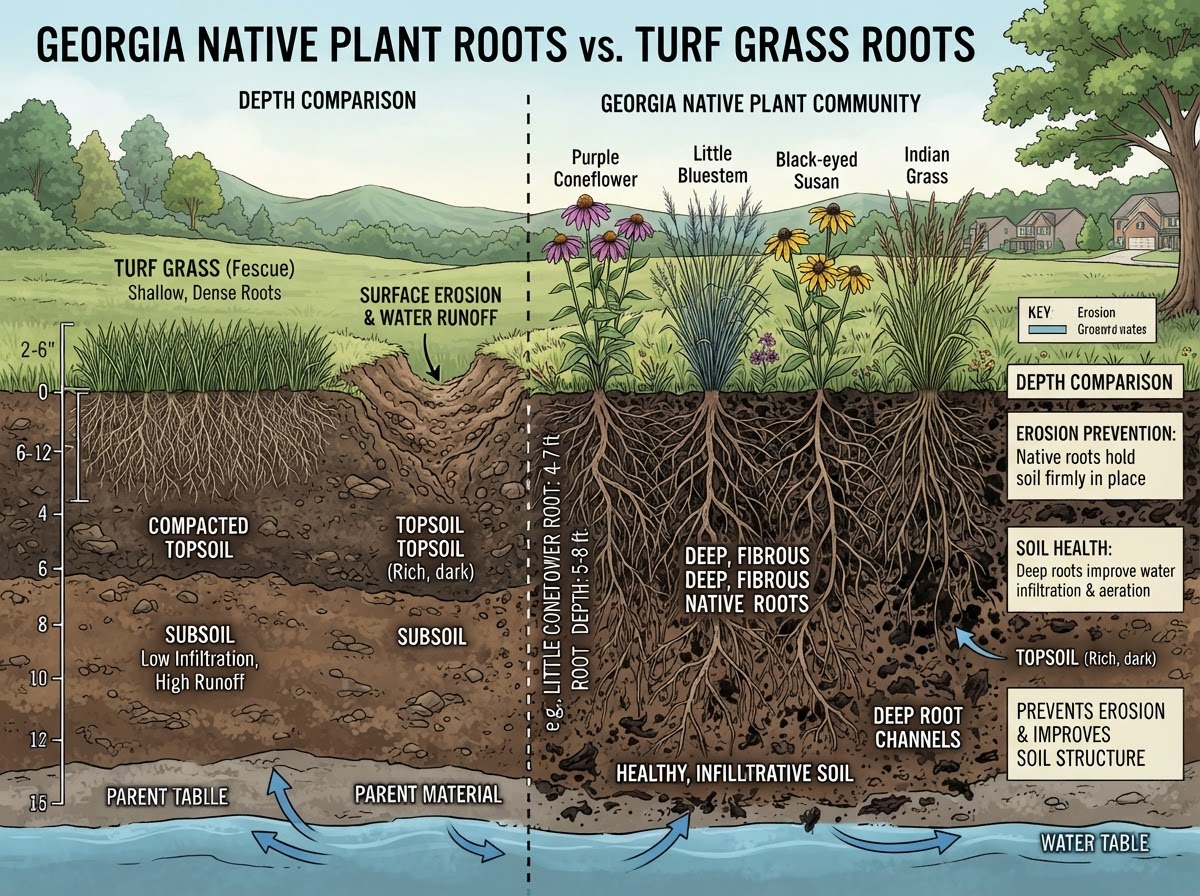
Deep Roots: Why Native Grasses Outperform Retaining Walls
A guide to natural slope stabilization using the massive root systems of native Georgia grasses.
Full Article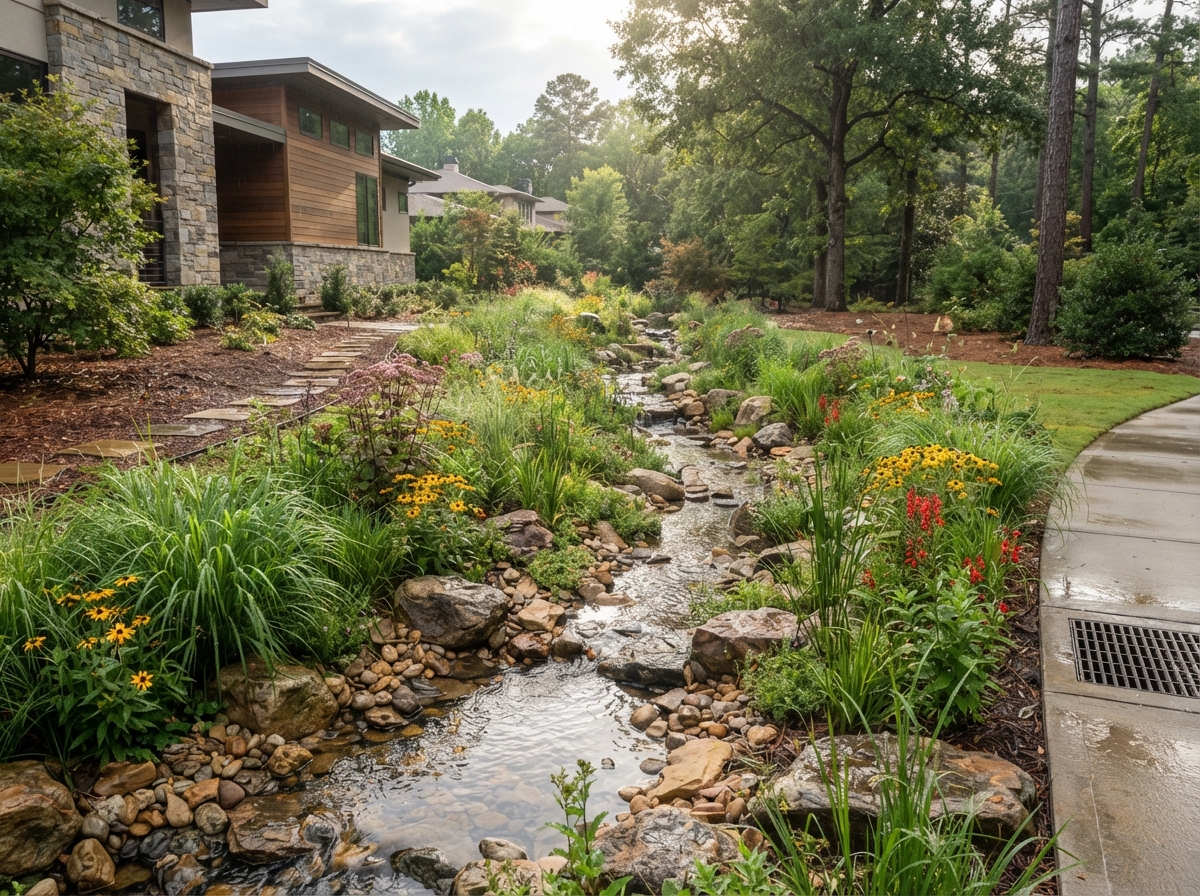
Bioswales: Large-Scale Drainage Solutions for Georgia Properties
Managing water on sloped driveways and commercial properties using vegetated bioswales.
Full Article