Ecological Stewardship: A Seasonal Guide to Maintaining Your Georgia Native Landscape
Native landscapes aren't maintenance-free—they require stewardship. Learn the seasonal rhythms of caring for your native habitat in Georgia.
Moving from 'Mow and Blow' to Ecological Stewardship
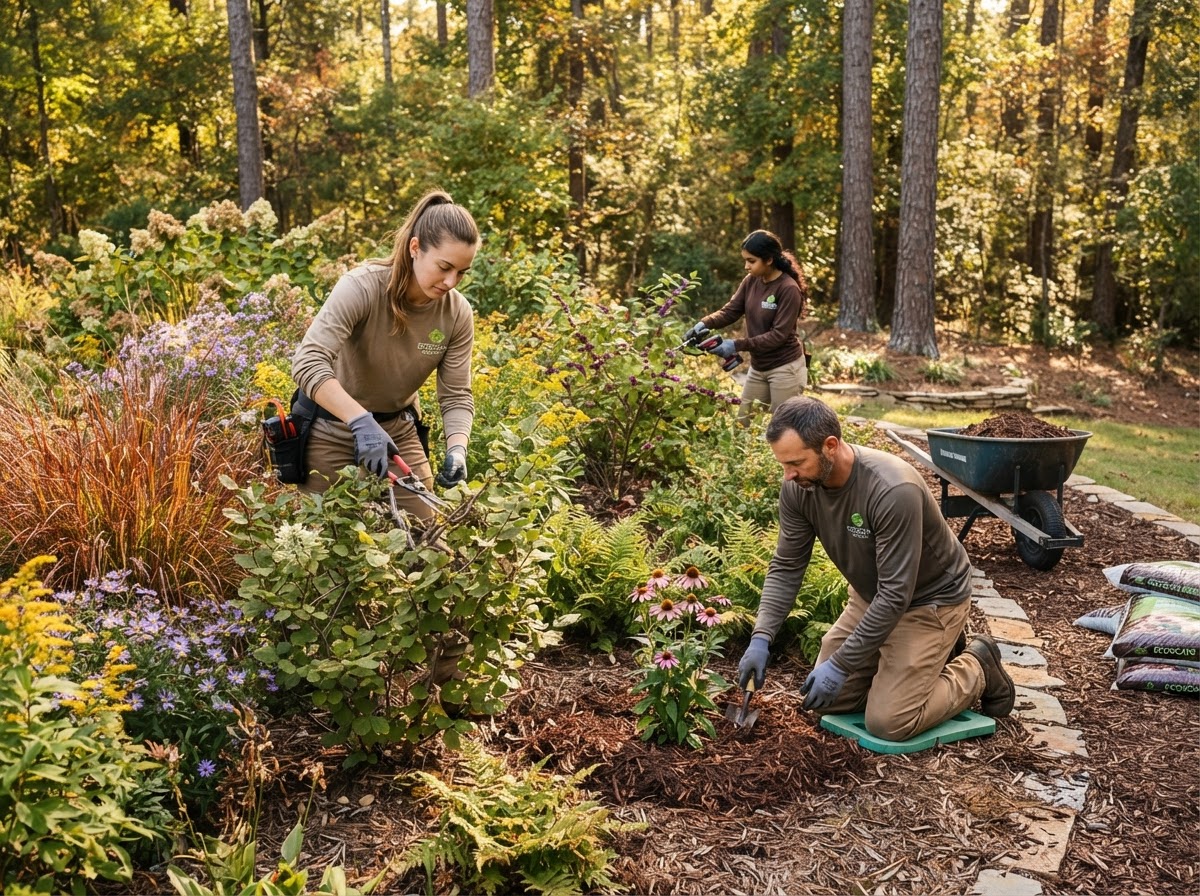
One of the biggest misconceptions about native landscaping is that it's 'no maintenance.' While it's true that native plants require far less water and no synthetic chemicals compared to traditional lawns, they still require thoughtful care. We call this 'ecological stewardship.'
In Northeast Georgia, the rhythms of a native garden are tied to our unique seasonal cycles. Maintenance in a native landscape is about guiding the system toward maturity, managing competition from invasive species, and ensuring the habitat continues to provide resources for wildlife year-round.
Stewardship involves selective weeding — knowing which plants are helpful natives and which are aggressive invasives like Japanese stiltgrass or Chinese privet. It also involves seasonal cut-backs that are timed to protect overwintering pollinators, rather than just meeting an arbitrary aesthetic standard.
The shift from traditional maintenance to ecological stewardship is also a shift in mindset. Traditional landscaping aims to keep everything static — the same height, the same color, the same shape, week after week. Ecological stewardship embraces change. A native garden is a living system that evolves over time, and our role as stewards is to guide that evolution in a healthy direction rather than to freeze it in place.
Spring Stewardship (March–May)
Spring in Northeast Georgia is a time of explosive growth and renewal. By mid-March, many native perennials are pushing new growth, and the first spring ephemerals like Virginia Bluebells (Mertensia virginica) and Bloodroot (Sanguinaria canadensis) may already be blooming in shaded areas. This is the busiest season for ecological stewardship.
The first major task is the late-winter cut-back. In late February or early March, before new growth emerges, we cut back the previous year's standing stems to within 4-6 inches of the ground. We deliberately leave the cut stems rather than removing them — those hollow stems are critical nesting habitat for native bees, and the decomposing material feeds the soil. The 4-6 inch stubble also provides structure for new growth to lean on and helps mark plant locations before they emerge.
Spring is also the time to assess winter damage and make any needed repairs. We check for erosion from winter rains, particularly on slopes and in rain gardens. Any mulch that has shifted is redistributed, and we add fresh mulch to maintain a 2-3 inch layer. We use natural hardwood mulch rather than dyed mulch, which can contain chemicals that harm soil biology.
Weeding is critical in spring. Many invasive species emerge early and grow rapidly, outcompeting native plants for light and resources. We focus on removing invasives like Japanese stiltgrass (Microstegium vimineum), which germinates in early spring in our area, and garlic mustard (Alliaria petiolata), which can be pulled easily before it sets seed. The key is to remove invasives before they flower and set seed — a single garlic mustard plant can produce thousands of seeds.
Spring is also an ideal time for dividing and transplanting. Native perennials that have been in place for 3+ years often benefit from division, which rejuvenates the plant and provides material to fill gaps or share with neighbors. We divide plants on cool, cloudy days and water thoroughly after transplanting to reduce transplant shock.
Summer Stewardship (June–August)
Summer in Georgia is hot, humid, and challenging for both plants and people. By June, temperatures regularly exceed 90 degrees, and the combination of heat and humidity can stress even native plants. However, one of the greatest advantages of native landscaping is that these plants are adapted to Georgia summers and generally require no supplemental irrigation once established.
The primary summer task is monitoring. We walk the landscape weekly, looking for signs of stress, pest issues, or invasive encroachment. In the first two years after installation, we do provide supplemental water during extended dry spells — typically when we have gone 10-14 days without significant rainfall. After establishment, native plants develop deep root systems that allow them to access moisture far below the surface.
Summer is when we manage aggressive native species. Some natives, like Bee Balm (Monarda didyma) and certain Goldenrod species (Solidago), can spread aggressively by rhizome and crowd out other plants. Rather than trying to eliminate these species, we thin them selectively, removing 30-50% of the spreading growth to maintain diversity. This is a judgment call that comes with experience — the goal is a balanced community, not a monoculture.
We also monitor for pest issues, though we rarely intervene. Native plants and native insects have co-evolved, and most insect damage is part of a healthy ecosystem. Caterpillars eating leaves are often the larvae of butterflies and moths, and they are a critical food source for nesting birds. We only intervene when a pest population threatens to kill a plant, and we use the least toxic method available — typically hand removal or targeted organic treatments.
Deadheading — removing spent flower heads — is a personal choice in ecological landscaping. Some clients prefer the tidier look of deadheaded plants, while others appreciate the seed heads for their visual interest and wildlife value. We generally recommend leaving seed heads in place, as they provide food for goldfinches, sparrows, and other seed-eating birds throughout the fall and winter.
Fall Stewardship (September–November)
Fall is the most rewarding season for ecological stewards in Northeast Georgia. The late-blooming natives — Asters, Goldenrods, and native grasses — are at their peak, and the landscape is alive with pollinator activity. Monarch butterflies passing through on migration can be seen nectaring on Goldenrod and Aster blooms, and the air is filled with the activity of bees building their winter reserves.
Fall is the best time for planting in Georgia. The soil is still warm from summer, which encourages root growth, while cooler air temperatures reduce stress on the tops of plants. We do most of our installation and supplemental planting in October and November. Plants installed in fall have a significant head start on spring-installed plants because they spend the winter developing root systems.
One of the most important fall stewardship decisions is what NOT to do. The traditional fall 'clean-up' — cutting everything to the ground, raking every leaf, and bagging it all for disposal — is one of the most harmful practices for wildlife. Fallen leaves provide habitat for overwintering insects, including many butterfly and moth species that spend the winter in leaf litter. Seed heads provide food for birds. Standing stems provide nesting sites for bees.
Instead, we recommend a 'tidy but not sterile' approach. We remove diseased plant material, which could harbor pathogens over winter, and we cut back any plants that have collapsed or become unsightly. But we leave the majority of the standing structure and fallen leaves in place. This approach maintains the landscape's appearance while preserving its ecological function.
Fall is also the time to collect seed from your native plants. We can teach you how to harvest, clean, and store seed from species like Purple Coneflower, Black-eyed Susan, and native grasses. This seed can be used to fill gaps in your landscape, shared with neighbors, or donated to local restoration projects.
Winter Stewardship (December–February)
Winter in Northeast Georgia is relatively mild, but it is an important time for ecological stewardship. While the above-ground portion of the landscape may appear dormant, a great deal of activity is happening below the surface. Roots continue to grow and develop during our mild winter days, and many insects are overwintering in plant stems, leaf litter, and soil.
The primary winter task is planning. This is when we review the past growing season, assess what worked and what didn't, and plan any changes or additions for the coming spring. We take photos and notes, document plant performance, and identify areas where the landscape could be enhanced with additional species or adjusted management.
Winter is also the time for structural work. If we need to install edging, repair pathways, or make drainage improvements, we do it during the dormant season when plants are less likely to be damaged. We also use this time to remove any woody invasives like Chinese privet (Ligustrum sinense) or Bradford pear (Pyrus calleryana) seedlings, which are easier to see and access when deciduous plants have dropped their leaves.
We strongly advise against cutting back native perennials in fall or early winter. The standing stems and seed heads provide critical winter habitat and food sources. Wait until late February or early March, just before new growth begins, to do your annual cut-back. This timing protects overwintering insects while still giving new growth room to emerge.
If you have native grasses like Little Bluestem or Pink Muhly Grass, their winter color — warm tans, coppers, and golds — provides stunning visual interest in the dormant landscape. Resist the urge to cut them back until spring. The standing grass also catches fallen leaves and snow, creating micro-habitats for beneficial insects and small wildlife.
Invasive Species Management: The Ongoing Battle
Invasive species management is the single most time-consuming aspect of ecological stewardship in Northeast Georgia. Our region's mild climate and abundant rainfall create ideal conditions for a wide range of invasive plants that can quickly overwhelm a native landscape if left unchecked. Understanding how to identify and manage these species is essential for any native landscape steward.
The 'Big Four' invasives in our area are Japanese stiltgrass (Microstegium vimineum), Chinese privet (Ligustrum sinense), English ivy (Hedera helix), and Japanese honeysuckle (Lonicera japonica). Each requires a different management approach, but the principles are the same: act early, be persistent, and avoid chemical controls whenever possible.
Japanese stiltgrass is an annual grass that can produce up to 1,000 seeds per plant. The key to managing it is preventing seed set. We hand-pull stiltgrass in early summer before it flowers, being careful to remove the entire root. Because the seed bank can persist for 3-5 years, consistent pulling over multiple seasons is required to bring it under control. The good news is that pulling is effective — stiltgrass has shallow roots and comes out easily.
Chinese privet is a woody shrub that forms dense thickets, particularly along stream corridors and forest edges. We use a combination of cutting and targeted treatment for privet. Large shrubs are cut at the base, and the stumps are treated with a minimal application of glyphosate (painted directly on the cut surface, not sprayed). Smaller seedlings are pulled by hand. Follow-up is critical — privet will resprout from roots, so we revisit treated areas annually.
The most important principle of invasive management is to prioritize. We focus on protecting the highest-value areas first — the established native plant communities that are providing real habitat function. In some cases, we accept that certain invasives may persist in low numbers at the edges of the landscape, and we focus our energy on preventing them from spreading into the core habitat areas. This pragmatic approach is more sustainable than trying to achieve complete eradication, which is often impossible in our region.
Frequently Asked Questions
Q.Should I cut back my native plants in the fall?
We recommend leaving most native perennials standing through the winter. The dried seed heads provide food for birds, and the hollow stems serve as critical overwintering habitat for native bees. A final cut-back is best done in late February or early March.
Q.How often should I water my native landscape?
Established native landscapes (3+ years old) generally require no supplemental irrigation in Northeast Georgia. During the first two years, water deeply during extended dry spells (10-14 days without significant rainfall).
Q.Do I need to fertilize my native plants?
No. Native plants are adapted to Georgia's natural soil conditions and do not require synthetic fertilizers. In fact, fertilizers can harm native plants by promoting weed growth and disrupting the soil biology that native plants depend on. Compost top-dressing every 2-3 years is sufficient.
Senior Partner Landscaping
Ecological Landscaping Experts
Ready to restore your piece of Georgia?
Our ecological designers specialize in native plant systems across Oconee, Athens-Clarke, and surrounding counties.
Book Your Free ConsultationMore from the Blog
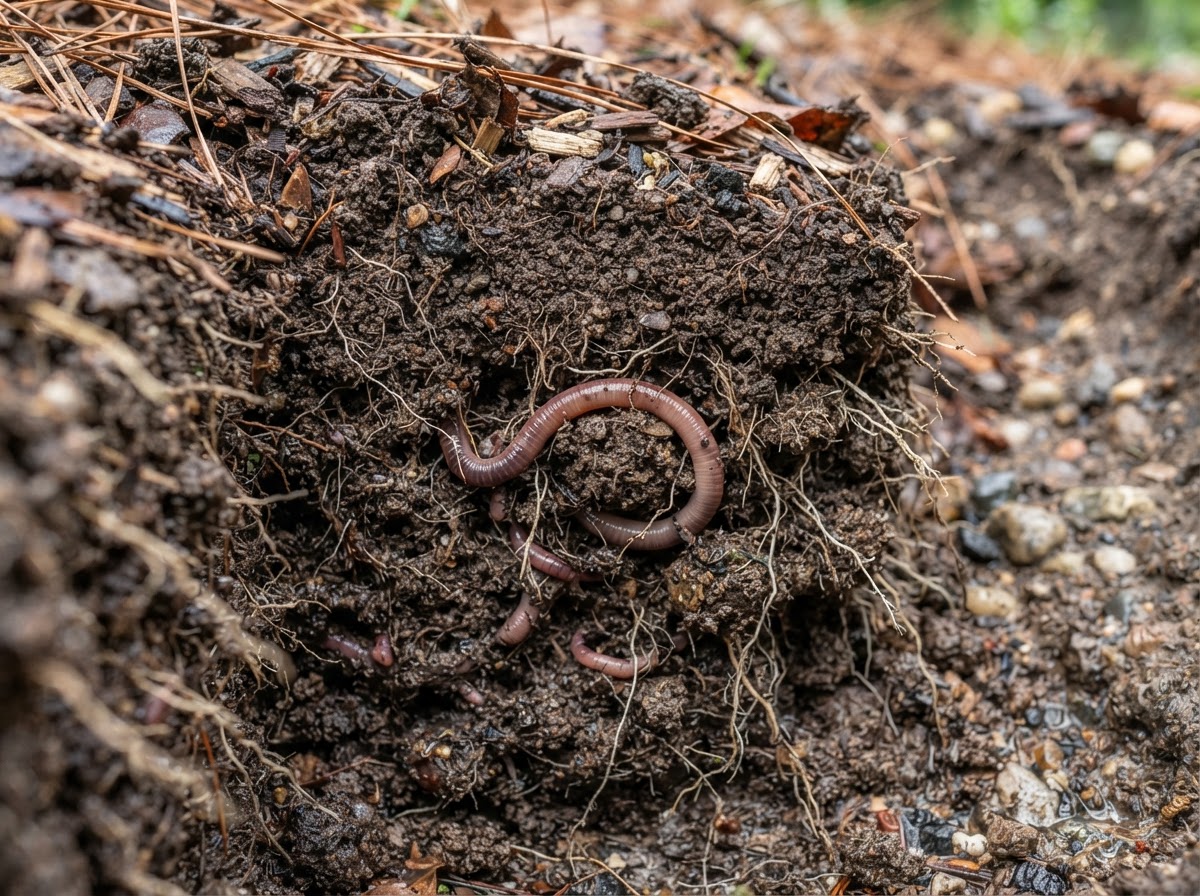
Soil Health: The Foundation of Every Georgia Native Garden
Healthy soil is the engine that drives a successful ecological landscape. Learn how to build soil biology naturally.
Full Article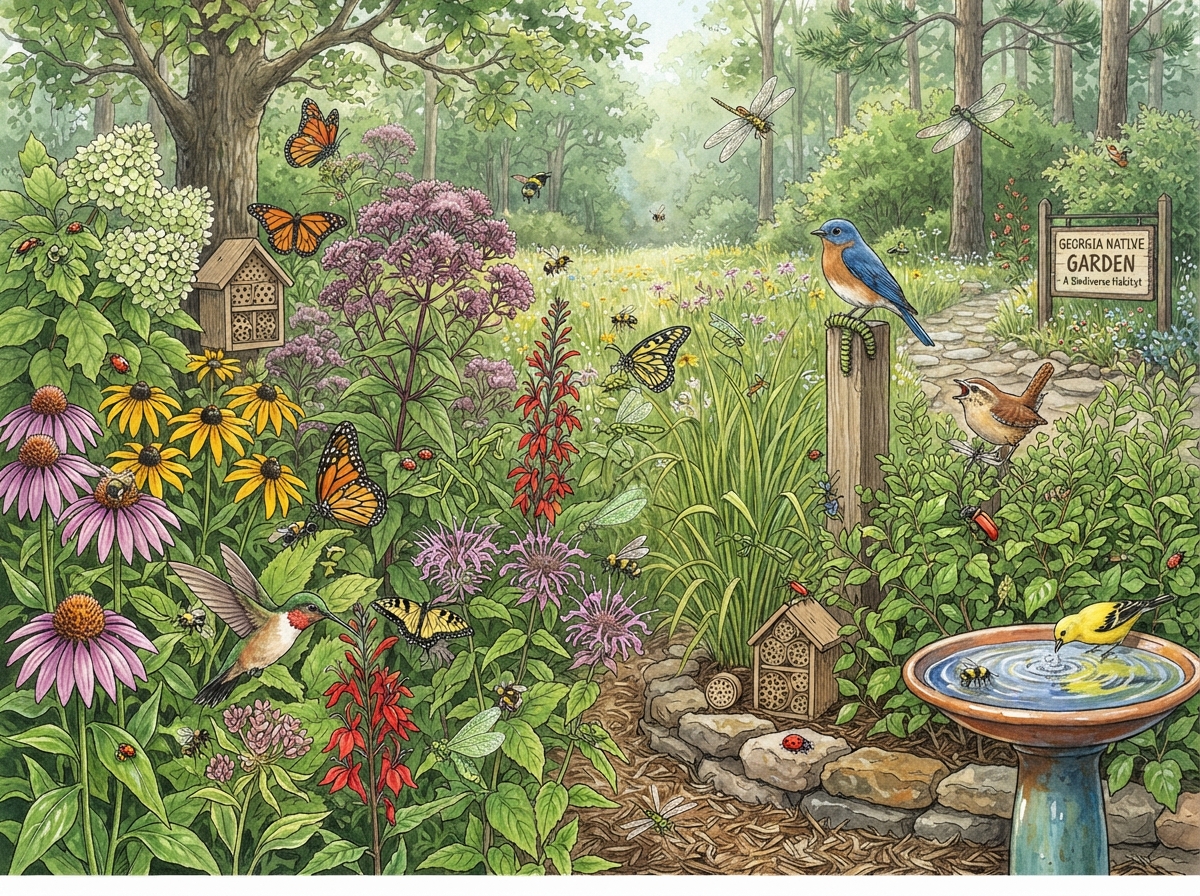
Backyard Biodiversity: Building a Living Ecosystem in Northeast Georgia
Learn how to attract birds, beneficial insects, and amphibians to your property with native plants.
Full Article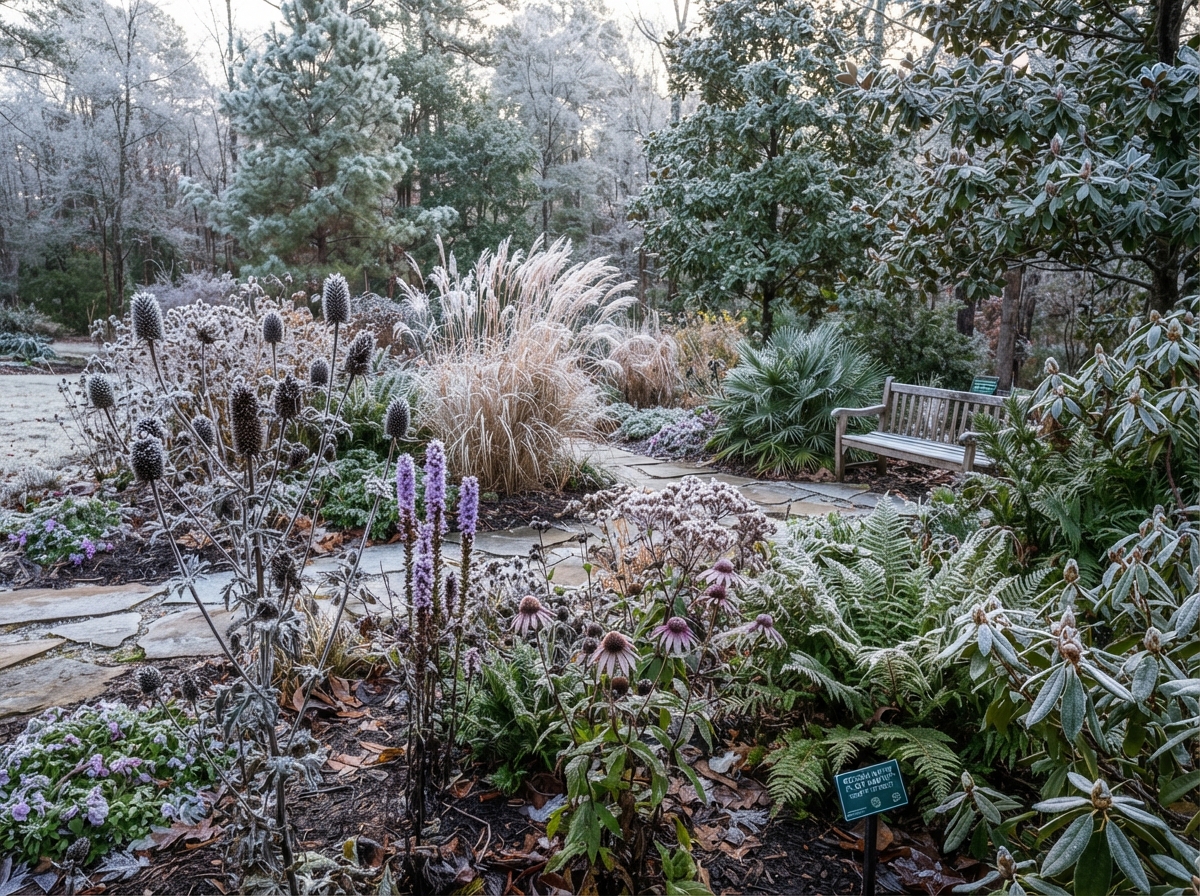
Winter Interest: Why Your Native Garden Shouldn't Be 'Cleaned' in Fall
Discover the beauty and ecological importance of the winter native garden in Georgia.
Full Article