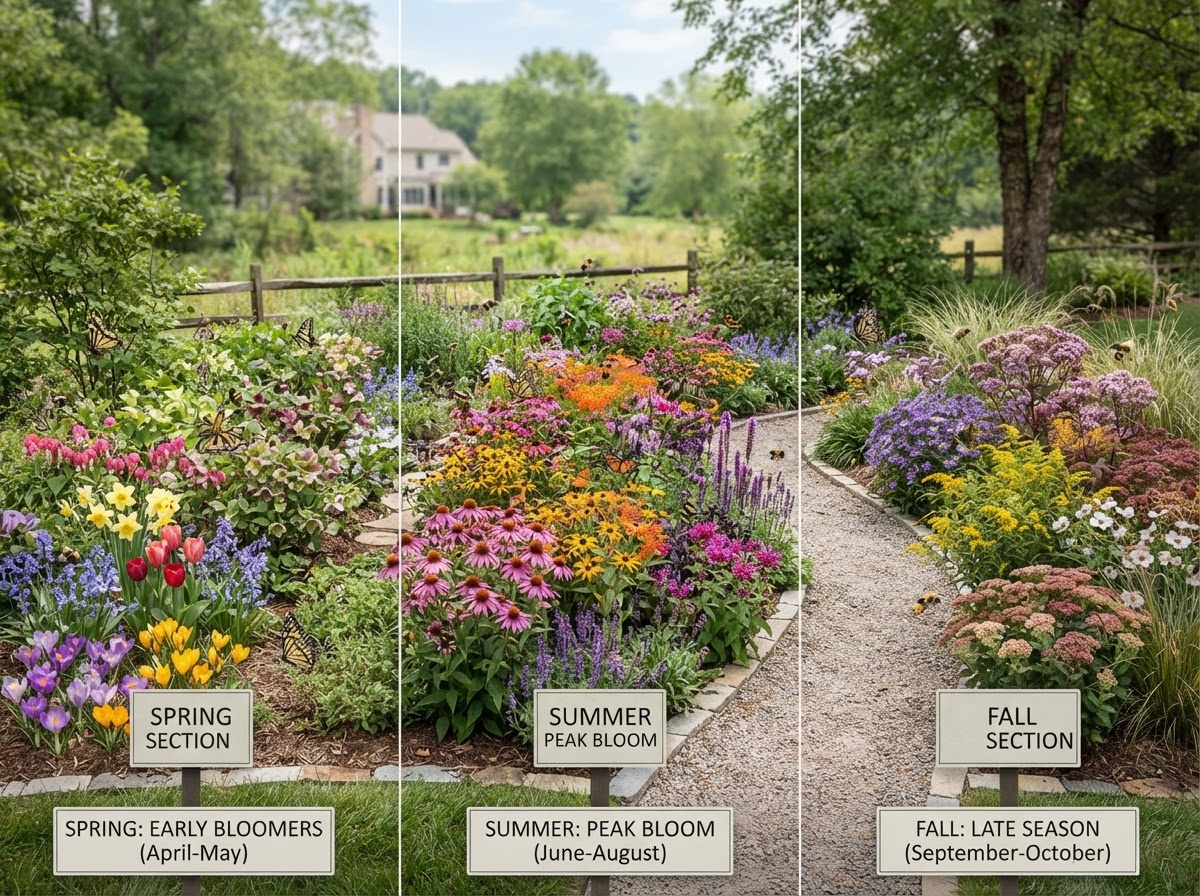
The Four-Season Pollinator Garden: Planning for Continuous Habitat
A successful pollinator garden never goes dormant. Learn how to design for blooms from March through November in Georgia.
Filling the Seasonal Gaps
Many gardens suffer from 'summer-only syndrome,' where they are vibrant in July but provide little food in April or October. A truly resilient pollinator habitat in Northeast Georgia needs to account for the full activity cycle of our native insects.
Spring is when queen bumblebees emerge and need immediate fuel to start their nests. Plants like Eastern Redbud and Native Azaleas are critical early-season resources. Summer is the time for high-volume nectar producers like Coneflowers and Bee Balm. But fall is often the most critical and overlooked season, when migrating monarchs and late-active bees need the high-energy nectar provided by Asters and Goldenrods.
When we design for clients in Bogart or Watkinsville, we create a bloom calendar that ensures at least three species are in flower at any given time. This 'bridge' of resources is what allows a garden to support entire lifecycles rather than just passing visitors.
Senior Partner Landscaping
Ecological Landscaping Experts
Ready to restore your piece of Georgia?
Our ecological designers specialize in native plant systems across Oconee, Athens-Clarke, and surrounding counties.
Book Your Free ConsultationMore from the Blog
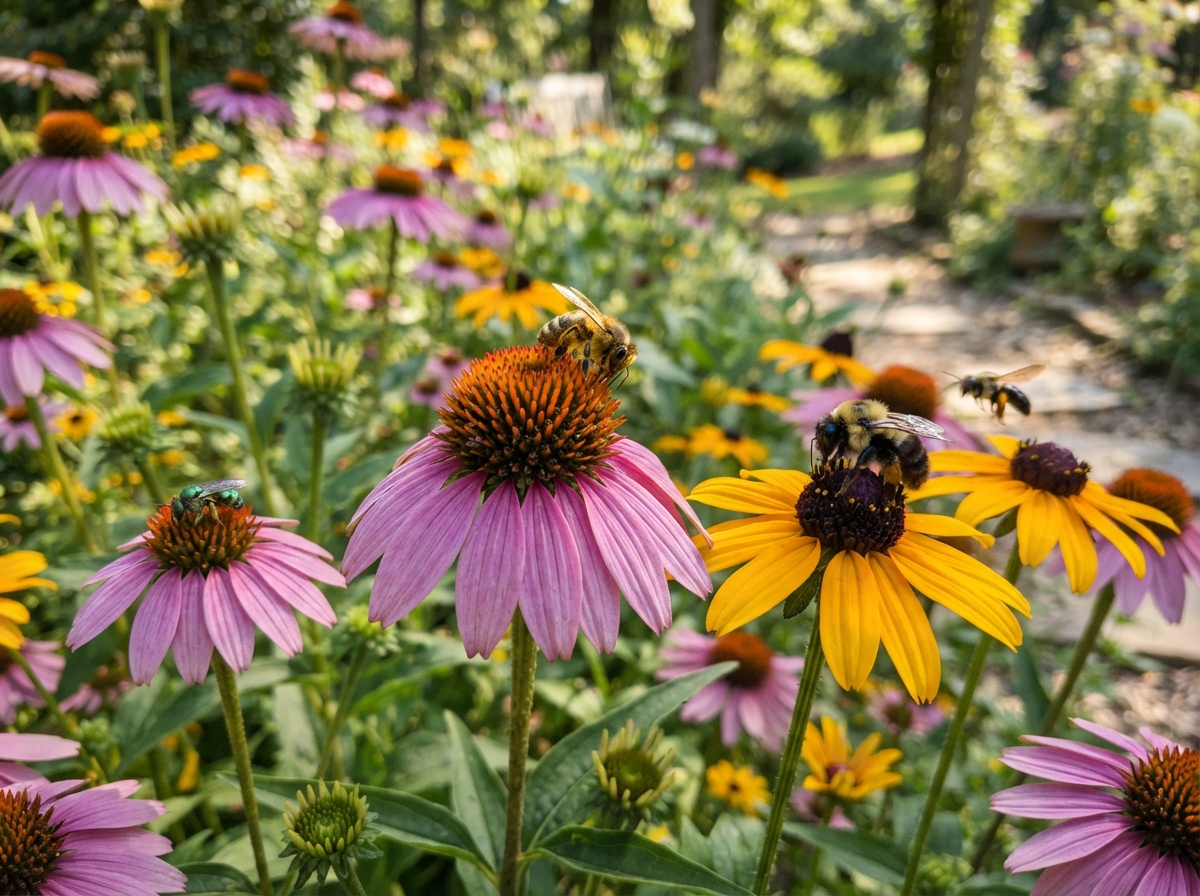
Why Pollinator Gardens Matter in Georgia: A Complete Guide for Northeast Georgia Homeowners
Discover how a thoughtfully designed pollinator garden supports declining bee and butterfly populations while adding beauty and ecological value to your Georgia landscape.
Full Article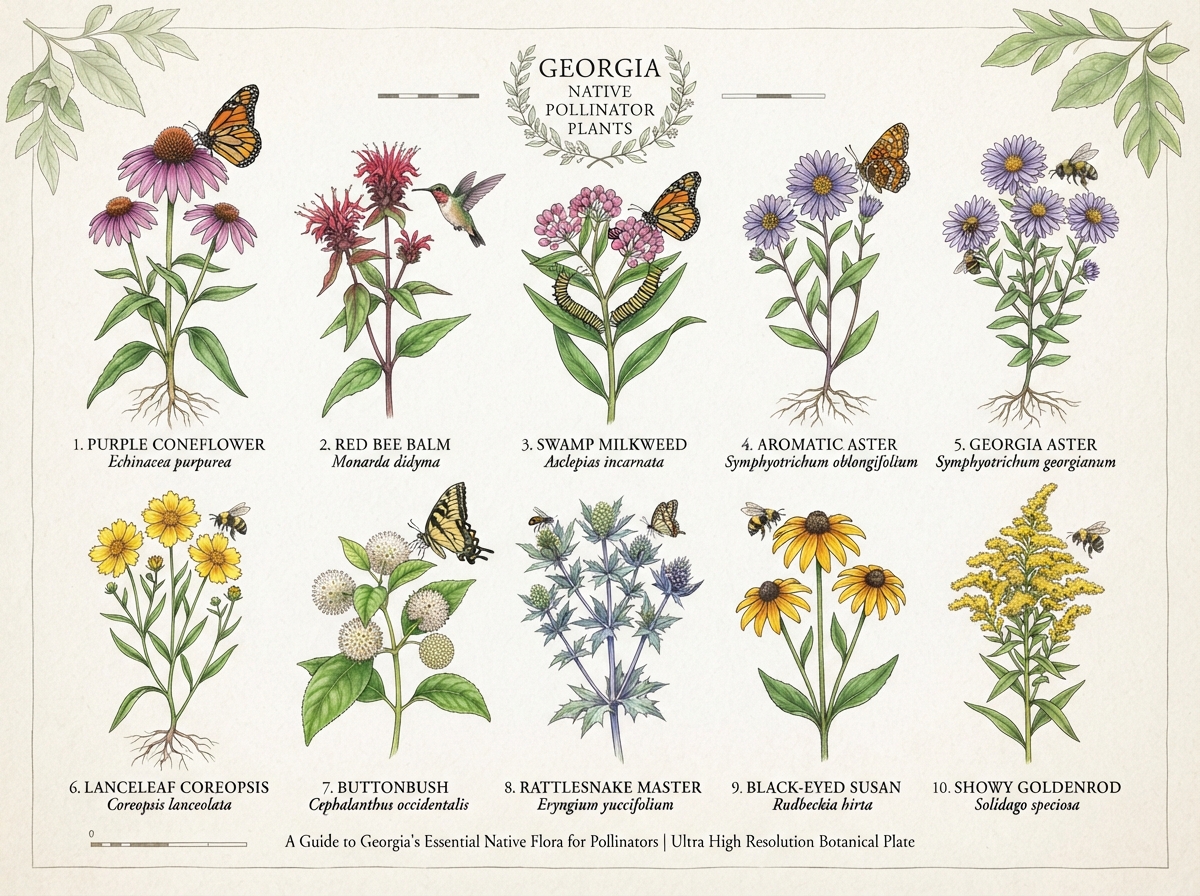
Top 10 Native Plants for Georgia Pollinators
A practical guide to the best native plants for attracting and supporting bees, butterflies, and hummingbirds in your Georgia garden.
Full Article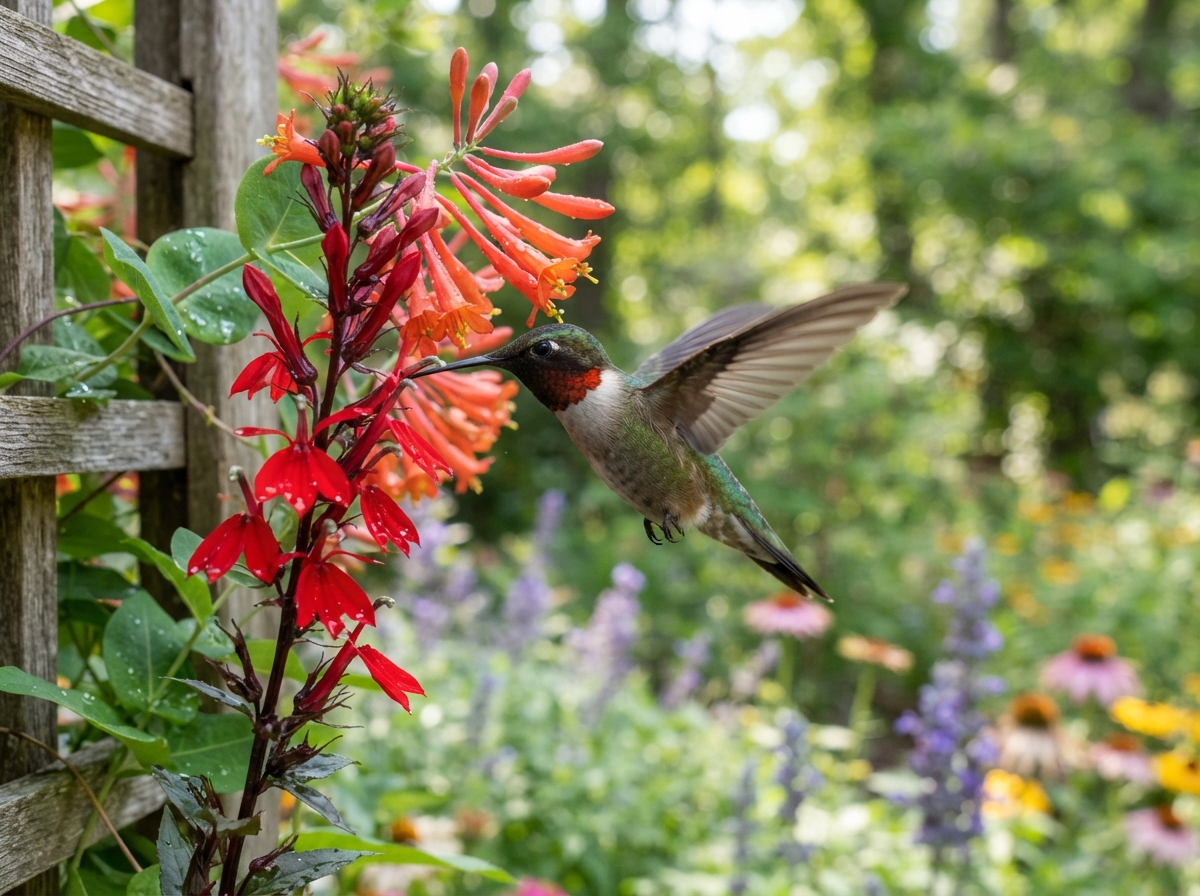
Creating a Hummingbird Haven with Georgia Native Plants
Turn your yard into a sanctuary for Ruby-throated Hummingbirds using native tubular flowers and tiered landscaping.
Full Article